The Agentic Pomodoro: Iterating Faster with AI Agents
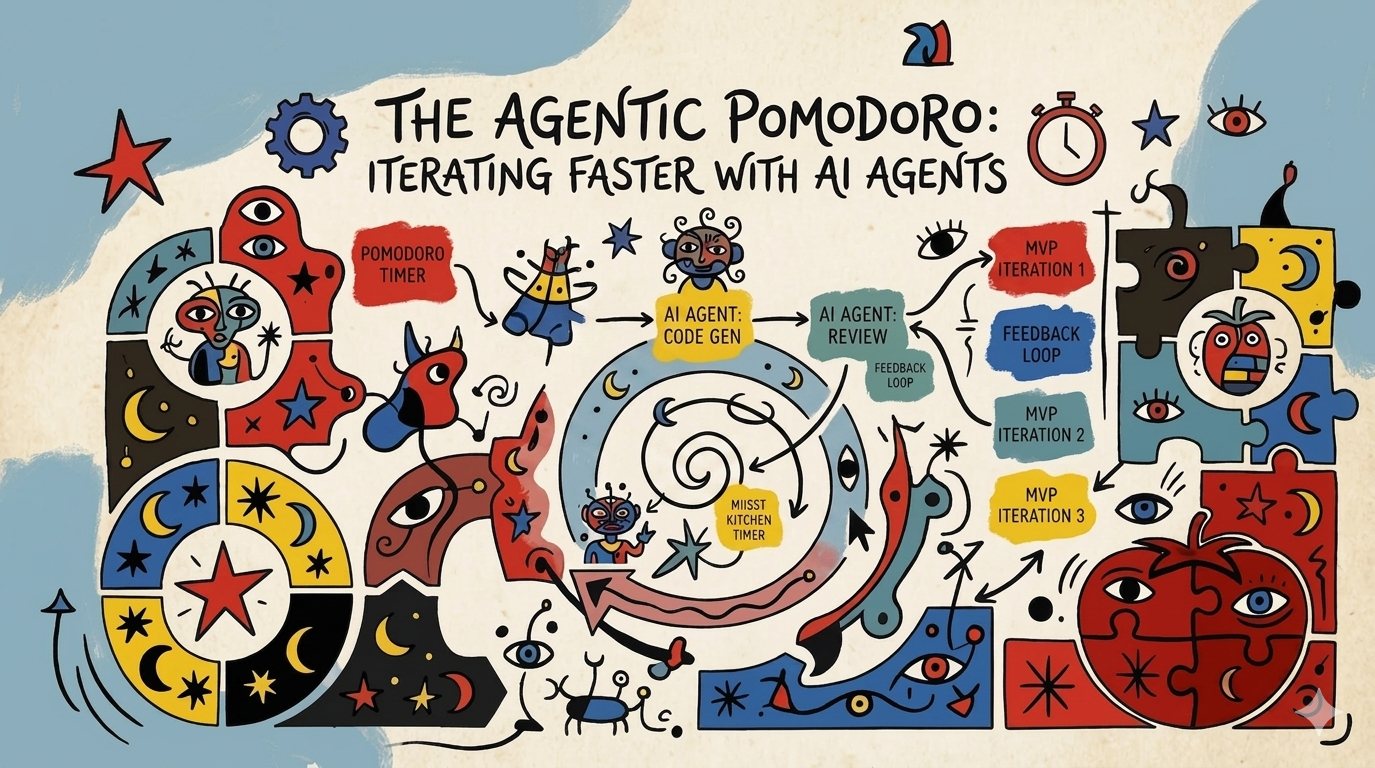
Leverage the Pomodoro technique to encapsulate your sessions with AI agents
Content
The Pomodoro technique is usually seen as a productivity hack: 25 minutes of focused work, 5 minutes of rest. But that is only part of the story. Its real value is that it creates a simple, repeatable iteration loop that forces you to work within constraints.
That makes it a great fit for AI agents.
When you build with agents, the goal is not just to write prompts or wire up tools. The real challenge is learning quickly what works, what fails, and what needs to change. Pomodoro-style cycles give you a lightweight way to do that.
From timeboxing to experimentation
Instead of using Pomodoro only to manage your attention, use it to structure micro-experiments.
In each cycle you:
- Define one hypothesis.
- Run the agent or workflow.
- Review the result.
- Adjust the prompt, role, tool, or orchestration pattern.
This shifts the mindset from “building a system” to “running controlled experiments.”
That matters because agent behavior is often probabilistic, prompt-sensitive, and unpredictable. Long development cycles slow learning. Short cycles keep feedback tight and momentum high.
Why this works for agents
AI agents are different from traditional software. They are not fully deterministic, and they often produce emergent behavior. That makes them especially well suited to short, iterative loops.
Pomodoro-style work helps you:
- Avoid overengineering.
- Make small, isolated changes.
- Learn from failures faster.
- Stay close to actual system behavior.
In practice, this means you are less likely to design a complicated architecture too early. Instead, you evolve the system step by step based on evidence.
How to run the loop in Pomofocus
You can use Pomofocus to make the process concrete. Create one task per experiment, and treat each Pomodoro as a single hypothesis test.
Pomofocus supports task lists, estimated Pomodoros, and customizable work and break intervals, which makes it easy to align the timer with your experiment rhythm.
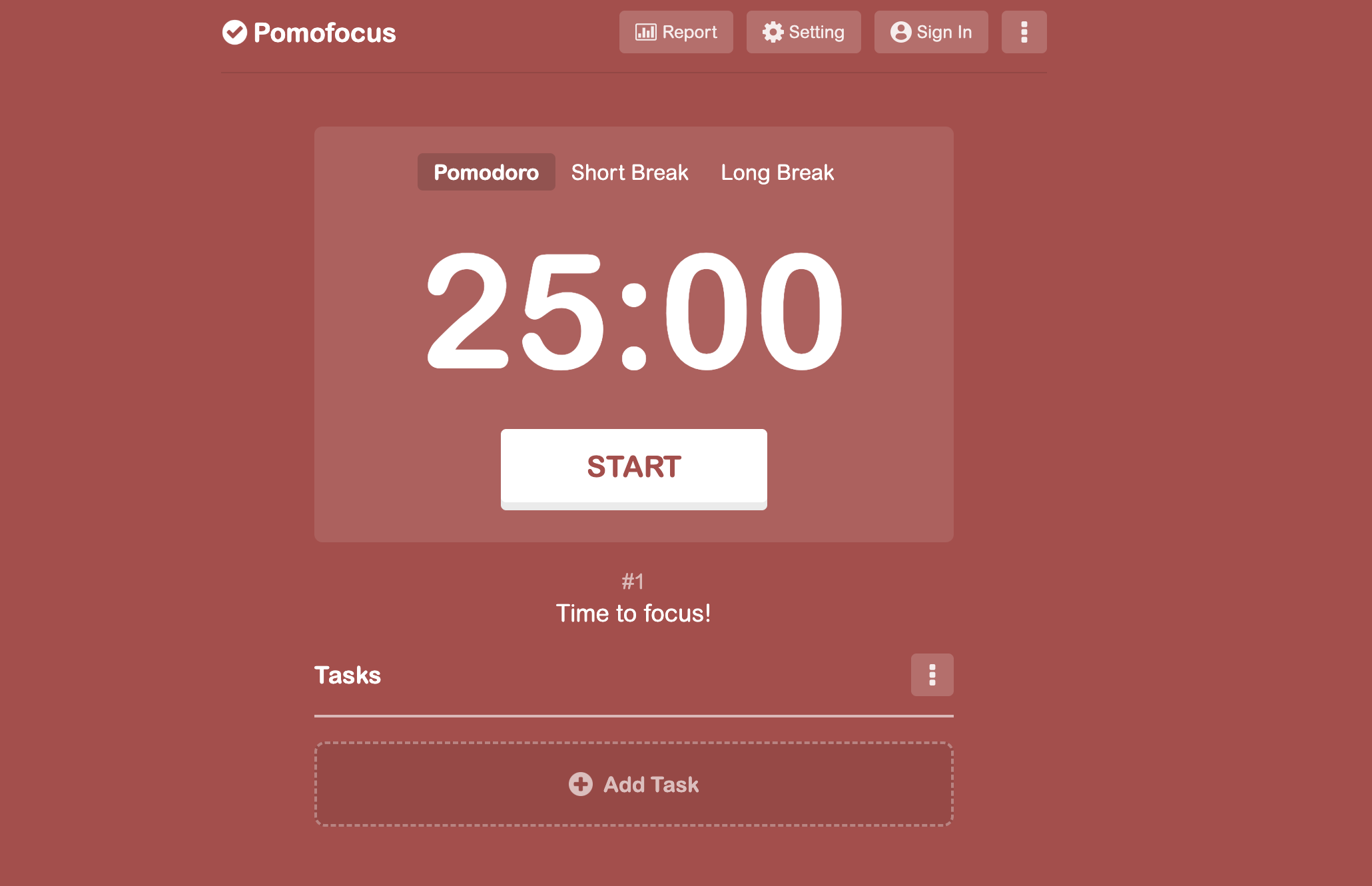
A practical workflow looks like this:
- Define one task per experiment that fits under 25 minutes.
- Start the timer and make only that change during the session.
- Use the short break to review logs, outputs, and failures.
- Repeat for three to five cycles before deciding whether to keep, tweak, or discard the idea.
To make the loop more useful, keep a small note for each task with three fields: what changed, what improved, and what broke. That gives you a simple record of how the system is evolving across sessions.
The core idea
The Pomodoro technique is not really about the timer. It is about constraint.
Applied to AI agents, it becomes a way to move fast, reduce complexity, and learn continuously. Instead of waiting for a “finished” system, you build through short, focused loops that favor evidence over assumption.
And lastly, just a warning: If you want this approach to work well, you need feedback. That means logging outputs, tool calls, errors, and latency.
That is a strong fit for agent development, where the best results usually come from iteration, not prediction.
Enjoy!